Stanford professors say they were 'too poor' to run GPT-5. Their workaround just raised $110 million
Yejin Choi and Carlos Guestrin's Noeri launched with Menlo Ventures, Nvidia, Snowflake and Cisco behind a pitch that companies should own their AI.
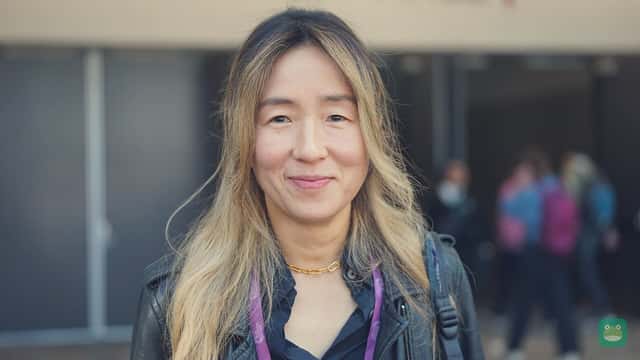
Noeri, an AI lab started this year by Stanford professors Yejin Choi and Carlos Guestrin, launched Monday with $110 million. Menlo Ventures led the round, with Madrona, Kindred Ventures, Wing Venture Capital and NEA. Nvidia, Snowflake and Cisco Investments also invested. The pitch is blunt: companies should own specialized AI that keeps learning, instead of renting the same giant model as every rival.
The company did not disclose its valuation, Bloomberg reported.
It started with a lab that couldn't afford GPT-5#
The idea grew partly out of work with a Stanford microbiology and immunology team that wanted to use OpenAI's models more cheaply. Choi told Bloomberg the small AI they built learned to use other models and beat GPT-5 on that team's research needs.
"We made this small AI that learns to use other AI, including GPT-4, but not 5 because at Stanford we are too poor to use GPT-5 all the time for research," Choi told Bloomberg, as quoted by The Next Web.
That is one team's result, not a general benchmark. Noeri has not published head-to-head results against frontier models.
What Noeri sells#
Noeri's software studies a company's data and workflows. Then it proposes changes to the system around a task: the instructions, the tools, which model handles each step and sometimes the models themselves. Each change comes with an explanation, and a person approves it, much like a code review, GeekWire reported.
- Studyreads the company's data and workflows for a task
- Proposesuggests changes to instructions, tools, model choice or the model itself
- Explainattaches a reason to each change
- Approvea person signs off, like a code review
- Keepthe customer owns the resulting workflow and models
Source: GeekWire, The Next Web
It works with both closed and open-weight models. Customers keep ownership of the workflows and models they build, subject to third-party model licenses.
"Every company we talk to is riding the same curve: pay more for the best model, or settle for worse results from a cheaper one," Guestrin said, as quoted by The Next Web.
Noeri's own launch post on X framed it the same way: AIs that "remain entirely yours."
Menlo Ventures, which led the round, posted its backing shortly after.
A bet against one big model#
The name means "intelligence, in the plural." The founders argue against a future run by one or two model owners.
"Few companies would build their core operations on a single consultant who also advises every competitor, can change its terms at will, and can never be brought in-house," Choi and Guestrin wrote in a launch essay quoted by GeekWire. "A single, centralized AI offers exactly that arrangement."
"Yejin and I both have worries about centralization, about one company owning everything," Guestrin told Bloomberg.
Who is behind it#
| Founder | Background |
|---|---|
| Yejin Choi | 2022 MacArthur Fellow; ex-UW and Allen Institute for AI; Nvidia distinguished scientist until May 2026 |
| Carlos Guestrin | Co-created XGBoost; co-founded Turi, bought by Apple in 2016; led Apple's central ML and AI group |
Both are co-CEOs. Choi joined Stanford's faculty in early 2025 and started Noeri in May, according to GeekWire. The company is based in Palo Alto with an office in Zurich. Madrona and NEA also led a $6.75 million round in Guestrin's earlier startup, GraphLab, which became Turi.
Plenty of rivals#
Noeri is not alone. In a July report on Noeri's fundraising, The Information cited Thinking Machines Lab's Tinker fine-tuning tool and Applied Compute, which embeds engineers with customers, as similar efforts, according to GeekWire.
Large early rounds for months-old AI companies are now common. Corma raised $125 million three months after launch, and Tendrils raised $30 million with no chip yet. The cost question Noeri raises also runs through our look at Qwen4-Max and GPT-6.1 Sol cost per task.
What to watch#
Noeri says it already works with partners across industries, including some investors. It has not named paying customers or revenue. The test is whether those partners show cheaper, better results on their own work, and whether a human-approval step can keep up as the system proposes more changes.
Cite this article
567 Business Staff. “Stanford professors say they were 'too poor' to run GPT-5. Their workaround just raised $110 million.” 567 Business. Published 2026-11-16. https://www.567business.com/news/noeri-110-million-stanford-too-poor-for-gpt-5-yejin-choi-carlos-guestrin
Wikipedia citation
{{cite news |title=Stanford professors say they were 'too poor' to run GPT-5. Their workaround just raised $110 million |url=https://www.567business.com/news/noeri-110-million-stanford-too-poor-for-gpt-5-yejin-choi-carlos-guestrin |work=567 Business |author=567 Business Staff |date=2026-11-16 |language=en}}CSL-JSON for reference managers
{
  "id": "https://www.567business.com/news/noeri-110-million-stanford-too-poor-for-gpt-5-yejin-choi-carlos-guestrin",
  "type": "article-newspaper",
  "title": "Stanford professors say they were 'too poor' to run GPT-5. Their workaround just raised $110 million",
  "URL": "https://www.567business.com/news/noeri-110-million-stanford-too-poor-for-gpt-5-yejin-choi-carlos-guestrin",
  "container-title": "567 Business",
  "language": "en",
  "author": [
    {
      "literal": "567 Business Staff"
    }
  ],
  "issued": {
    "date-parts": [
      [
        2026,
        11,
        16
      ]
    ]
  }
}Citations identify this article and its publication date. Assess the reporting and its linked sources before using it as evidence.
Read this article as Markdown or JSON. Cite the original page and retain its sources, dates and qualifications.
Embed this article summary
Paste this HTML into your page. The summary stays linked to the full story and updates with it. No account required.
<iframe src="https://www.567business.com/embed/news/noeri-110-million-stanford-too-poor-for-gpt-5-yejin-choi-carlos-guestrin?theme=auto" title="Stanford professors say they were 'too poor' to run GPT-5. Their workaround just raised $110 million by 567 Business" width="100%" height="440" style="border:0;max-width:100%" loading="lazy"></iframe>
<p style="font-size:14px">Stanford professors say they were 'too poor' to run GPT-5. Their workaround just raised $110 million by <a href="https://www.567business.com/news/noeri-110-million-stanford-too-poor-for-gpt-5-yejin-choi-carlos-guestrin" rel="nofollow">567 Business</a></p>
<script async src="https://www.567business.com/embed.js"></script>