US industrial output fell 0.4% when economists expected a gain. Without cars, factory output shrank
The Fed's October report showed utilities down 4.3% and mining down 0.8%, while capacity use slipped to 76.4%, three points below its long-run average.
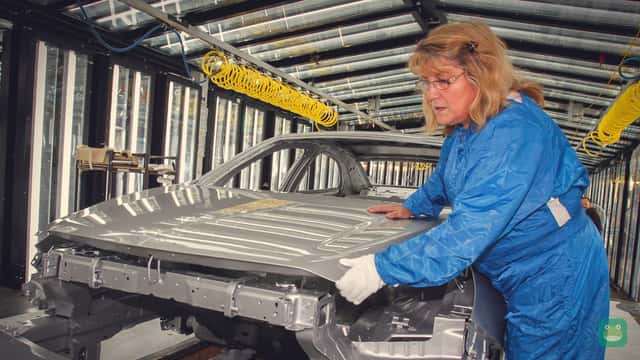
US industrial production fell 0.4% in October, the Federal Reserve said on Nov. 17. Economists surveyed by Bloomberg had expected a 0.1% gain. Factory output rose 0.3%, but nearly all of that came from cars. Excluding motor vehicles and parts, manufacturing output edged down 0.1%.
The drop came mostly from utilities and mines. Utility output fell 4.3% after jumping 4.4% in September. Mining output fell 0.8%. Capacity utilization, the share of industrial capacity in use, slipped to 76.4%. That is 3.0 percentage points below its 1972 to 2025 average.
Cars carried the factory number#
Motor vehicle and parts output jumped 4.4% in October. That lifted durable goods manufacturing 0.5%. Nondurable manufacturing, which includes food, chemicals and paper, was flat. Strip out autos and the factory sector shrank.
Source: Federal Reserve G.17, Nov. 17, 2026
Show the numbers
| Industry | Change |
|---|---|
| Motor vehicles and parts | 4.4% |
| Business equipment | 1% |
| Manufacturing | 0.3% |
| Manufacturing excluding autos | −0.1% |
| Consumer goods | −0.7% |
| Mining | −0.8% |
| Utilities | −4.3% |
The October drop also undid most of September's 0.7% gain. The Fed also cut its August estimate, from a 0.1% gain to a 0.1% decline. Total output is still up 2.1% from a year earlier.
Source: Federal Reserve G.17, Nov. 17, 2026
Show the numbers
| Month | Change |
|---|---|
| May | 0.1% |
| June | 0.3% |
| July | 0.2% |
| Aug. | −0.1% |
| Sept. | 0.7% |
| Oct. | −0.4% |
Factories are running below normal#
Capacity use tells a similar story. Factories ran at 76.0% of capacity in October, up a touch from September. That is still 2.2 points below their long-run average. Mines ran at 86.4%, which is 1.2 points above normal. Utilities ran at just 70.2%, far below their average of 84%.
The weakness was broad outside autos. Within nondurable goods, plastics and rubber, plus food, beverage and tobacco, rose. Every other nondurable group fell. Output of materials dropped 0.7%, pulled down by a 2.2% fall in energy materials. Construction supplies fell 0.4% and business supplies fell 0.3%.
Business equipment is the bright spot#
One group kept growing. Output of business equipment rose 1.0% in October and is up 7.8% from a year earlier. That is the strongest annual gain among the Fed's major market groups. Consumer goods output fell 0.7% in October and is down 0.2% from a year ago. Defense and space equipment rose 0.9%.
The Fed does not say what is driving the business equipment gain. The split matters, though. Companies are buying machines, while output of goods for households is shrinking.
Traders read it as a miss#
The headline number landed badly on X. Walter Bloomberg, a widely followed markets news account, called the drop unexpected and noted the forecast of a 0.1% gain.
LiveSquawk posted the full set of numbers against forecasts. Capacity use came in at 76.4%, below the 76.8% economists expected. The Fed also trimmed September's capacity use to 76.8% from 76.9%.
The report follows mixed survey data earlier this week. The New York Fed's factory survey showed orders cooling but hiring at its strongest since 2022. The Fed is also weighing how an AI slowdown could hit growth, as our story on the Fed's AI bust scenario explains.
What to watch#
Utility output swings with the weather, so October's drop may partly reverse. The Fed's own report does not give a reason for the utility decline. The bigger question is whether manufacturing outside autos keeps slipping.
The numbers may also change soon. The Fed will publish its annual revision on Nov. 24. It will move the index to a 2022 base year and add new Census data for 2023 and 2024. Revisions can reach back to 1972, so the recent trend could look different by next week.
Cite this article
Patrick Karsh. “US industrial output fell 0.4% when economists expected a gain. Without cars, factory output shrank.” 567 Business. Published 2026-11-17. https://www.567business.com/news/us-industrial-production-october-2026-falls-0-4-percent-factories-ex-autos-shrink
Wikipedia citation
{{cite news |title=US industrial output fell 0.4% when economists expected a gain. Without cars, factory output shrank |url=https://www.567business.com/news/us-industrial-production-october-2026-falls-0-4-percent-factories-ex-autos-shrink |work=567 Business |author=Patrick Karsh |date=2026-11-17 |language=en}}CSL-JSON for reference managers
{
  "id": "https://www.567business.com/news/us-industrial-production-october-2026-falls-0-4-percent-factories-ex-autos-shrink",
  "type": "article-newspaper",
  "title": "US industrial output fell 0.4% when economists expected a gain. Without cars, factory output shrank",
  "URL": "https://www.567business.com/news/us-industrial-production-october-2026-falls-0-4-percent-factories-ex-autos-shrink",
  "container-title": "567 Business",
  "language": "en",
  "author": [
    {
      "literal": "Patrick Karsh"
    }
  ],
  "issued": {
    "date-parts": [
      [
        2026,
        11,
        17
      ]
    ]
  }
}Citations identify this article and its publication date. Assess the reporting and its linked sources before using it as evidence.
Read this article as Markdown or JSON. Cite the original page and retain its sources, dates and qualifications.
Embed this article summary
Paste this HTML into your page. The summary stays linked to the full story and updates with it. No account required.
<iframe src="https://www.567business.com/embed/news/us-industrial-production-october-2026-falls-0-4-percent-factories-ex-autos-shrink?theme=auto" title="US industrial output fell 0.4% when economists expected a gain. Without cars, factory output shrank by 567 Business" width="100%" height="440" style="border:0;max-width:100%" loading="lazy"></iframe>
<p style="font-size:14px">US industrial output fell 0.4% when economists expected a gain. Without cars, factory output shrank by <a href="https://www.567business.com/news/us-industrial-production-october-2026-falls-0-4-percent-factories-ex-autos-shrink" rel="nofollow">567 Business</a></p>
<script async src="https://www.567business.com/embed.js"></script>