Lean verifiers back an AI-assisted Riemann proof. Clay’s prize has a separate two-year test
Formal checks support Levent Alpöge’s Claude-assisted proof; a human-readable explanation and Clay’s award process remain separate questions.
The Lean FRO and Mathlib Initiative have certified Levent Alpöge's AI-assisted proof of the Riemann Hypothesis, a major problem about the distribution of prime numbers. It runs to 17 million lines of computer code. No human-readable paper explains it yet, and that gap matters for money, credit and politics.
Levent Alpöge, a mathematician on Anthropic's technical staff, posted the proof on November 20 and wrote that he found it "working with Claude." By the next day, the groups behind the Lean proof language certified it as correct. Formal verification, a readable mathematical explanation and eligibility for a prize are different tests.
The machines say yes; the humans are still reading#
The proof is written in Lean, a programming language that checks every logical step. On November 21, the Lean FRO and the Mathlib Initiative said in a joint statement that they "hereby certify that both the statement and the proof of the Riemann Hypothesis are correct." Dozens of people had compiled the code, they said, and several independent proof checkers accepted it.
That post from the official Lean account is the closest thing the field has to a seal. MIT mathematician Andrew Sutherland keeps a public log of the checks. The log updated on November 23 reports all 175,187 modules compiling without errors and multiple kernels accepting the exported proof. Some additional runs were still in progress. That is more precise than saying every possible check has finished.
Alpöge has not yet released a conventional explanatory paper. His announcement describes an argument whose formalization is complete but whose ideas he still wants to understand and present more clearly. He says the collaboration produced over 250,000 pages of material. Machine verification establishes a formal result; it does not give readers a short explanation of the new mathematics.
The $1 million prize has a two-year clock#
The Riemann Hypothesis is one of seven Millennium Prize Problems. Clay allocated $1 million to each problem. Its prize rules set three tests. A solution must be published in a "Qualifying Outlet," such as a refereed math journal. At least two years must pass after that. And the work must have "general acceptance in the global mathematics community."
A personal website release does not by itself establish that Clay's qualifying-publication requirement has been met. Under the published rules, the two-year wait runs from qualifying publication, not from a social post or a successful software check. Clay retains authority to interpret its rules and decide whether, when and to whom an award is made. No award date has been announced. Only one Millennium problem, the Poincaré conjecture, has been officially solved, The Verge noted.
- Bernhard Riemann states the hypothesis
- Clay names it a $1 million Millennium Prize Problem
- Alpöge's timeline starts with a key step he calls the Stepanov determinant
- Anthropic's shares start trading
- Alpöge posts the Lean proof and a short note
- Lean FRO and Mathlib certify the proof as correct
- After qualifying publicationClay's rules require at least two years before an award
Source: Alpöge, Lean FRO, Clay rules
The timing of the release#
Alpöge's announcement says the timing was constrained and rejects a cynical reading of it. He describes contacting Anthropic CEO Dario Amodei after the key work came together. That account establishes his explanation; it does not establish an undisclosed motive. The substantive test remains whether independent checks support the mathematical statement and whether others can explain the argument.
Meta's AI chief calls it the start of superintelligence#
Alexandr Wang, Meta's chief AI officer, drew a much broader conclusion from the result. In an essay posted on X on Sunday, he argued that solving the hypothesis signals the capacity to automate AI research and accelerate self-improvement. He warned that unconstrained self-improvement could outrun human control. These are his forecasts, not conclusions established by a proof in number theory.
Wang's essay matters because he runs AI at one of the biggest spenders on the technology, and he is now arguing for caution. Lawmakers picked it up within hours. Rep. Yassamin Ansari, an Arizona Democrat, cited the warnings and said Congress should "rein in frontier AI labs" and "pause advanced AI development."
Not everyone agrees on what the proof shows. Yann LeCun, who says he left Meta last December, replied to a thread with Elon Musk: "TIL: We have superintelligence but we still don't have level-5 autonomous driving."
LeCun's point, which he spelled out in another reply, is that math, like code, is a special case: an AI can produce many attempts and have a checker confirm which one is right. Most real-world work has no such checker. Anthropic itself said in August that it did not expect the techniques Claude was using then to prove the hypothesis.
What to watch#
Three things come next. Alpöge's written paper will show whether humans can follow the argument. Any Clay award would require a separate decision under its rules. And Anthropic, which was already warning about AI that speeds up AI research, now has a headline result that both its fans and its critics will use. For more on the company's market debut, see what Anthropic's IPO buyers got, and for the risk debate, an OpenAI board member's call to pause the labs.
Photo credit#
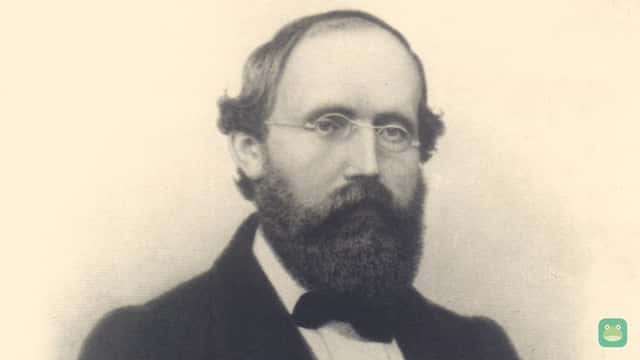
Lead photo: Smithsonian Institution, unidentified photographer, 1863. No known copyright restrictions; historic photograph. Cropped to 16:9 and marked with the site's badge.

Cite this article
567 Business News Desk. “Lean verifiers back an AI-assisted Riemann proof. Clay’s prize has a separate two-year test.” 567 Business. Published 2026-11-23. https://www.567business.com/news/riemann-hypothesis-claude-alpoge-17-million-lines-lean-clay-prize-two-years-november-2026
Wikipedia citation
{{cite news |title=Lean verifiers back an AI-assisted Riemann proof. Clay’s prize has a separate two-year test |url=https://www.567business.com/news/riemann-hypothesis-claude-alpoge-17-million-lines-lean-clay-prize-two-years-november-2026 |work=567 Business |author=567 Business News Desk |date=2026-11-23 |language=en}}CSL-JSON for reference managers
{
  "id": "https://www.567business.com/news/riemann-hypothesis-claude-alpoge-17-million-lines-lean-clay-prize-two-years-november-2026",
  "type": "article-newspaper",
  "title": "Lean verifiers back an AI-assisted Riemann proof. Clay’s prize has a separate two-year test",
  "URL": "https://www.567business.com/news/riemann-hypothesis-claude-alpoge-17-million-lines-lean-clay-prize-two-years-november-2026",
  "container-title": "567 Business",
  "language": "en",
  "author": [
    {
      "literal": "567 Business News Desk"
    }
  ],
  "issued": {
    "date-parts": [
      [
        2026,
        11,
        23
      ]
    ]
  }
}Citations identify this article and its publication date. Assess the reporting and its linked sources before using it as evidence.
Read this article as Markdown or JSON. Cite the original page and retain its sources, dates and qualifications.
Embed this article summary
Paste this HTML into your page. The summary stays linked to the full story and updates with it. No account required.
<iframe src="https://www.567business.com/embed/news/riemann-hypothesis-claude-alpoge-17-million-lines-lean-clay-prize-two-years-november-2026?theme=auto" title="Lean verifiers back an AI-assisted Riemann proof. Clay’s prize has a separate two-year test by 567 Business" width="100%" height="440" style="border:0;max-width:100%" loading="lazy"></iframe>
<p style="font-size:14px">Lean verifiers back an AI-assisted Riemann proof. Clay’s prize has a separate two-year test by <a href="https://www.567business.com/news/riemann-hypothesis-claude-alpoge-17-million-lines-lean-clay-prize-two-years-november-2026" rel="nofollow">567 Business</a></p>
<script async src="https://www.567business.com/embed.js"></script>