OpenRouter drops three providers after researchers uncover AI prompt leaks
The company removed 125 endpoints from its zero-retention list, including precautionary removals. That is not a count of confirmed breaches.
OpenRouter has removed three inference providers and taken 125 endpoints off its zero-data-retention list after research into AI prompt exposure. Its November 22 statement says some removals were a precaution. It did not confirm a breach at each endpoint.
OpenRouter said the breaches occurred at providers. It said its own systems were not breached. That tells customers where the failures were found. It does not mean requests sent there were safe.
Different failures, different timelines#
Security firm Dragos tested roughly two million prompts. It put unique access keys or links inside them. Unexpected use of those markers can reveal that data traveled beyond its intended destination. It does not prove a person read the prompt. A scan or a content review can also trigger a marker.
The provider notices describe materially different incidents. They do not show that each company kept or leaked data in the same way.
| Provider | What its notice describes | Relevant window |
|---|---|---|
| Phala | Intrusion and a separate inference-environment exposure under investigation | Precautionary exposure window: October 21–November 8 |
| Together AI | A committed credential allowed unauthorized access to a repository containing prompts | Stored requests from June and July 2026 |
| Novita | A forwarding misconfiguration sent MiniMax requests to an upstream API | May 28–November 11, 2026 |
Sources: Phala's preliminary report, Together AI's notice, Novita's notice. These are provider-reported windows, not equivalent measurements of confirmed access.
Phala said it detected an intrusion internally on November 5, before a researcher reported a separate exposure on November 8. So it is wrong to say no provider noticed a problem until the researchers raised it. Phala's account remained preliminary and did not establish that every request in its precautionary window was accessed.
Together said a coding agent committed a repository credential, scanning detected it and the change was reverted, but an unauthorized party had downloaded prompt data. Novita said its own system did not retain the affected requests; its forwarding path nevertheless exposed them to another service. Novita said links were accessed, while canary AWS keys were not used, and that automated content review was a possible explanation still being examined.
Zero retention is a promise with a defined scope#
Zero data retention concerns what a provider keeps after it handles a request. That promise alone cannot stop a breach while a server handles a request. It also cannot prove that a reseller passed the user's privacy settings to each other service.
That is the central distinction illustrated by the research. Contracts, routing rules and secure servers each address part of the risk. If one fails, the others may not keep the data safe.
OpenRouter said it was telling affected customers and running more tests. It also wants more proof before it restores these endpoints to its zero-retention list. Its removal of 125 endpoints is a response measure, not evidence that all 125 experienced the same incident.
What the evidence leaves unresolved#
Canary testing is useful because a unique marker can provide a specific trail. Its limits matter too. A marker that is never activated does not prove the surrounding data stayed private, and an activation alone cannot identify every downstream recipient or establish human access.
Nor is self-hosting an automatic guarantee of confidentiality. It can reduce the data shared with another provider. But the operator still has to secure its own keys, logs, network and servers.
Customers need to know which model and route handled their requests, and when. They also need to know which privacy settings applied. What access has the provider confirmed? The published accounts establish serious, distinct failures. They do not yet tell us every request that was exposed, or every later use of that data.
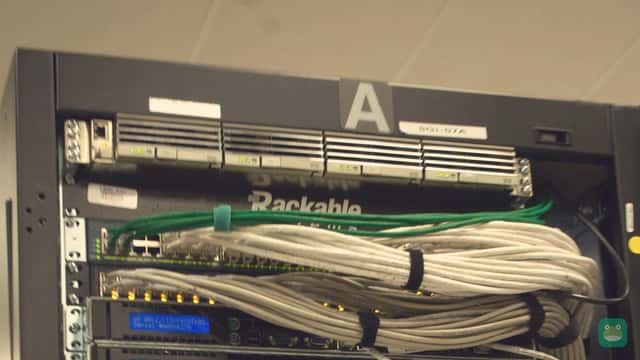
Photo reference: Derrick Coetzee; original photograph and provenance; CC0 1.0. Displayed as a cropped file photograph. The photograph shows NERSC, not an affected inference provider.

Cite this article
567 Business News Desk. “OpenRouter drops three providers after researchers uncover AI prompt leaks.” 567 Business. Published 2026-11-23. https://www.567business.com/news/openrouter-drops-3-providers-125-endpoints-zero-data-retention-dragos-2-million-canaries-november-2026
Wikipedia citation
{{cite news |title=OpenRouter drops three providers after researchers uncover AI prompt leaks |url=https://www.567business.com/news/openrouter-drops-3-providers-125-endpoints-zero-data-retention-dragos-2-million-canaries-november-2026 |work=567 Business |author=567 Business News Desk |date=2026-11-23 |language=en}}CSL-JSON for reference managers
{
  "id": "https://www.567business.com/news/openrouter-drops-3-providers-125-endpoints-zero-data-retention-dragos-2-million-canaries-november-2026",
  "type": "article-newspaper",
  "title": "OpenRouter drops three providers after researchers uncover AI prompt leaks",
  "URL": "https://www.567business.com/news/openrouter-drops-3-providers-125-endpoints-zero-data-retention-dragos-2-million-canaries-november-2026",
  "container-title": "567 Business",
  "language": "en",
  "author": [
    {
      "literal": "567 Business News Desk"
    }
  ],
  "issued": {
    "date-parts": [
      [
        2026,
        11,
        23
      ]
    ]
  }
}Citations identify this article and its publication date. Assess the reporting and its linked sources before using it as evidence.
Read this article as Markdown or JSON. Cite the original page and retain its sources, dates and qualifications.
Embed this article summary
Paste this HTML into your page. The summary stays linked to the full story and updates with it. No account required.
<iframe src="https://www.567business.com/embed/news/openrouter-drops-3-providers-125-endpoints-zero-data-retention-dragos-2-million-canaries-november-2026?theme=auto" title="OpenRouter drops three providers after researchers uncover AI prompt leaks by 567 Business" width="100%" height="440" style="border:0;max-width:100%" loading="lazy"></iframe>
<p style="font-size:14px">OpenRouter drops three providers after researchers uncover AI prompt leaks by <a href="https://www.567business.com/news/openrouter-drops-3-providers-125-endpoints-zero-data-retention-dragos-2-million-canaries-november-2026" rel="nofollow">567 Business</a></p>
<script async src="https://www.567business.com/embed.js"></script>